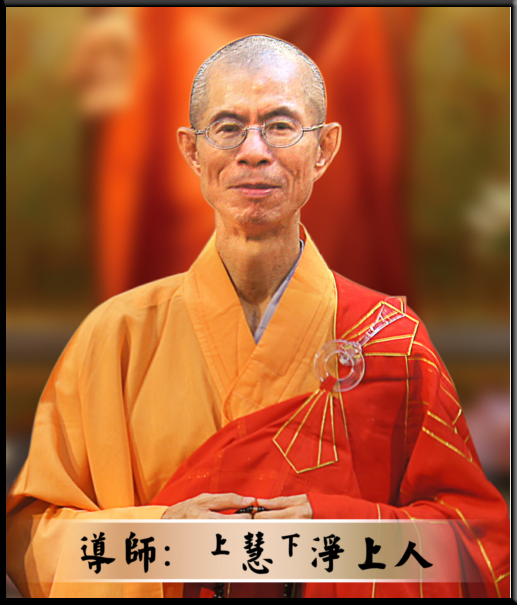
[Pure Land Dharma Introduction]
Purpose and Characteristics of Pure Land Buddhism
Pure Land School Purpose: "Receive Amitabha's deliverance in faith, exclusively recite Amitabha's name, aspire to be born in Amitabha's Pure Land, and widely liberate beings in all directions." This purpose captures the core vision of Pure Land Buddhism: from establishing faith, to method of practice, to the ultimate goal, and finally the bodhisattva vow after buddhahood, forming a complete path of cultivation.
Pure Land School Characteristics: "By name-recitation based on the Primal Vow, ordinary beings enter the reward land; with rebirth karma fulfilled in this life, one attains non-retrogression in this very life." This hallmark reveals what is most exceptional in the Pure Land path: it emphasizes the power of Amitabha Buddha's Primal Vow, enabling ordinary beings to be reborn in the reward land through reciting the Buddha's name. This reward land is Amitabha's Land of Bliss, where the Buddha's true reward body abides, with unsurpassed fruition. Moreover, the karma for rebirth is completed in one's present lifetime, and non-retrogression is attained here and now.
The Scriptures and Lineage of Pure Land Buddhism
The doctrinal system of Pure Land Buddhism is primarily grounded in the following scriptures and treatises:
- Primary scriptures: Pure Land Buddhism upholds the Infinite Life Sutra, the Contemplation Sutra, and the Amitabha Sutra as its core scriptures, known as the Three Pure Land Sutras, the fundamental source of its teachings.
- Patriarchal treatises: It follows the lineage commentaries of Bodhisattva Nagarjuna's Chapter on Easy Practice, Bodhisattva Vasubandhu's Treatise on Rebirth, Master Tanluan's Commentary on the Treatise on Rebirth and Hymn in Praise of Amitabha Buddha, and Master Daochuo's Collection on Peace and Joy. These writings deeply expound the meaning of the Three Pure Land Sutras and provide a solid theoretical foundation for Pure Land doctrine.
- Shandao's works: As the founding patriarch of the Pure Land school, Master Shandao left rich writings including the Commentary on the Contemplation Sutra (also known as the Four-Fascicle Commentary), Dharma Gate of Contemplation and Recitation, Hymns of Dharma Services, Hymns in Praise of Rebirth, and Hymns of Pratyutpanna, known together as Five Works in Nine Fascicles. Among them, the Commentary on the Contemplation Sutra is honored as the foundational patriarchal text that established the school, offering an authoritative interpretation of Pure Land teaching.
With its simplicity, universal accessibility, and openness to all capacities, Pure Land Buddhism has had far-reaching influence in East Asian Buddhism and gained broad devotion. Its teaching of "trust in the Buddha's deliverance and recite the Buddha's name for rebirth" extends across all beings and has guided countless ordinary people to liberation.
In an age of Dharma decline, with heavy afflictions and difficult practice, Pure Land Buddhism offers a practical and attainable path of liberation that brings swift accomplishment. It profoundly manifests Amitabha Buddha's compassionate and impartial vow to save all beings, becoming an essential refuge for modern practitioners.
Pure Land Buddhism brings hope to all beings because everyone can recite the Buddha's name, and therefore everyone has hope for rebirth. For ordinary people burdened by afflictions in this era, the Pure Land path is both easy and supremely profound, embodying the compassionate spirit of Buddhism in liberating sentient beings.
Sect Definition and Historical Background
The Chinese term "zong" (sect) carries meanings such as honoring, upholding, and taking as primary, and extends to ideas like supremacy, integration, uniqueness, and excellence. In Buddhism, a sect refers to taking one teaching as the principal gate among all teachings taught by the Buddha, and using it to integrate the rest in forming a coherent doctrinal system and community organization. Buddhism originated in India and, after entering China, developed through the Sui and Tang periods into schools such as Sanlun, Yogacara, Tiantai, Huayan, Vinaya, Esoteric, Chan, and Pure Land. Among these, Pure Land takes "Buddha-recitation for rebirth" as its core method and advocates relying on Amitabha Buddha's compassionate Primal Vow for rebirth in the Western Land of Ultimate Bliss. Because of its uniquely accessible path, it became one of the most influential schools among the general public.
Founder of the Pure Land School
Pure Land is one of the eight major schools of Chinese Buddhism, founded by Master Shandao (613-681) in the Tang dynasty. In his works, Master Shandao synthesized the teachings of earlier patriarchs and deeply elucidated Amitabha Buddha's Primal Vow and the practice of Buddha-recitation. This gave Pure Land Buddhism a complete doctrinal framework and a distinct sectarian identity, establishing its enduring place in Chinese Buddhist history.
Headquarters Website
Scan the QR code to stay updated.
扫码保存,获取更新。
请发个信息确认。

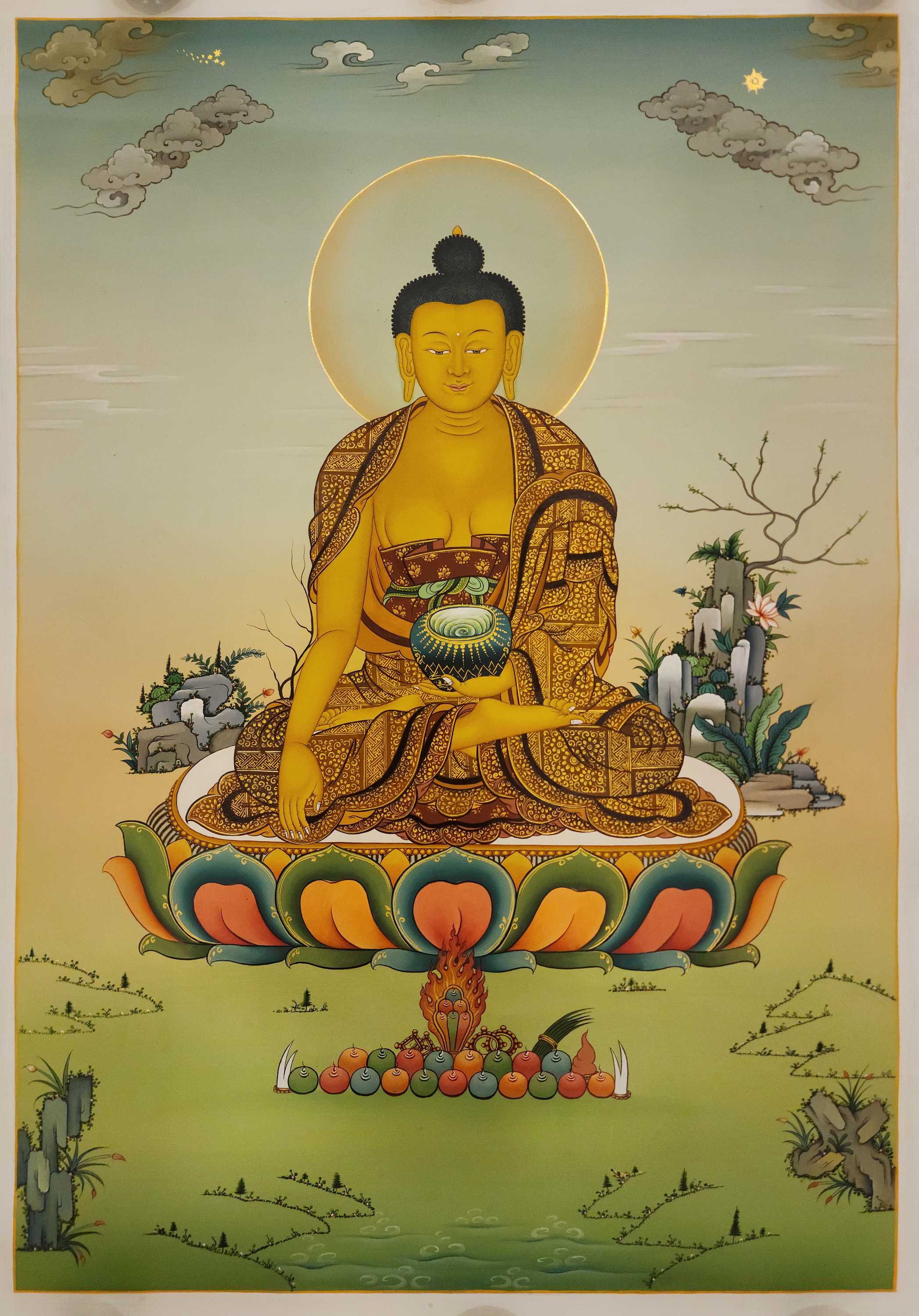
Buddha Shakyamuni
The founder of Buddhism, born in Lumbini, an ancient Indian philosopher.
Pure Land Lineage
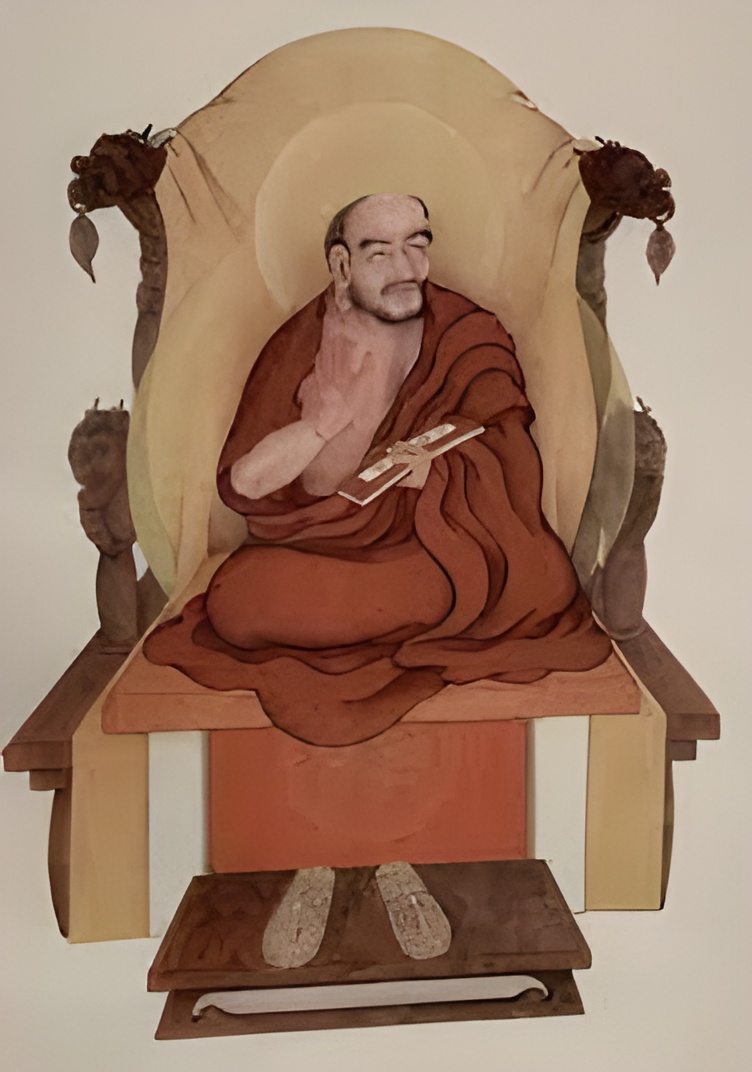
Bodhisattva Nagarjuna
Bodhisattva Nagarjuna, Sanskrit name Nagarjuna, was born about seven hundred years after the Buddha's passing (around 150-250 CE) into a Brahmin family in South India. It is said he was born beneath a tree and accomplished the Way through the dragon, thus named Nagarjuna. He lived for more than two hundred years.
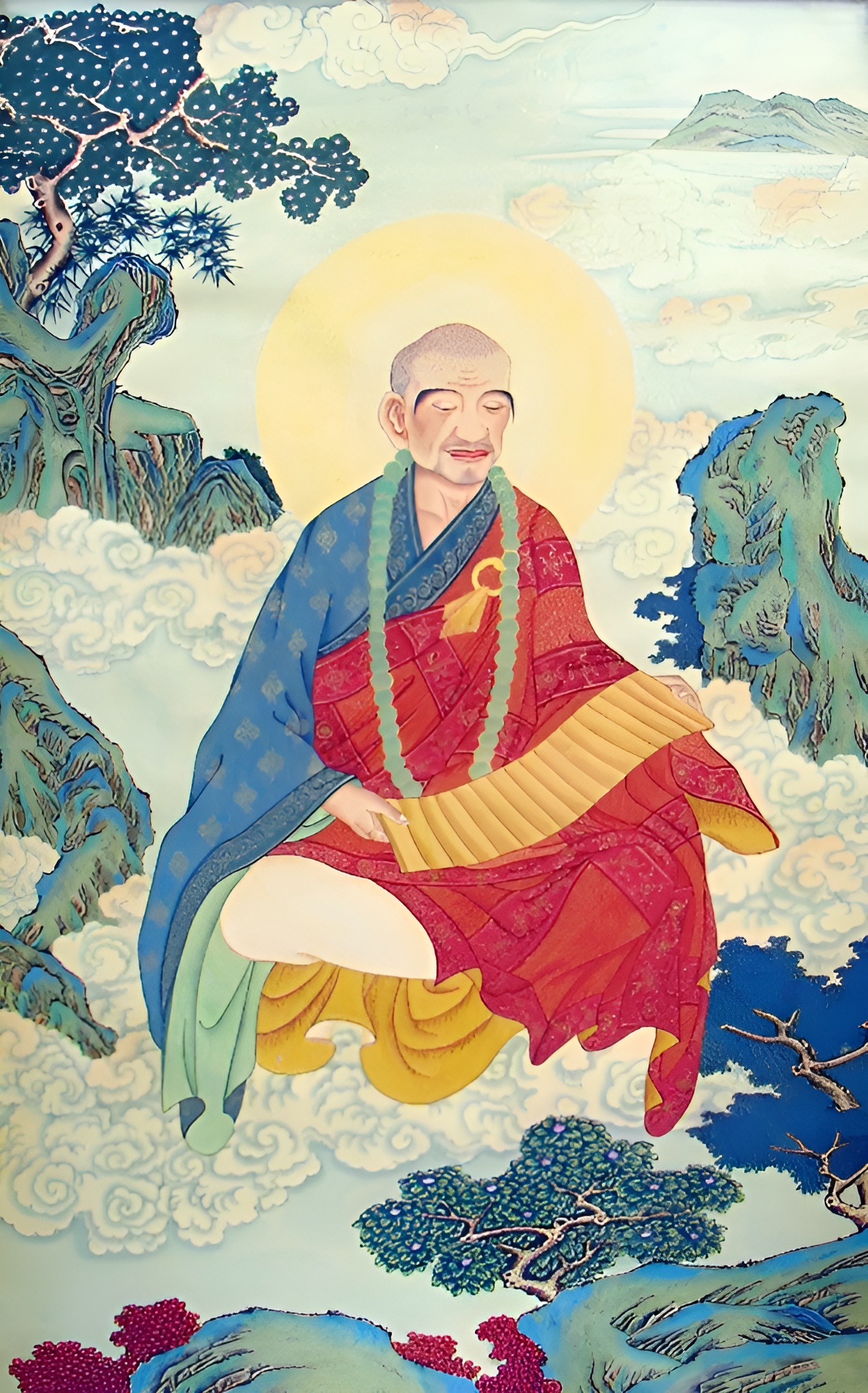
Bodhisattva Vasubandhu
Lineage treatise: One volume of the Treatise on Rebirth.
.jpg)
Master Tanluan
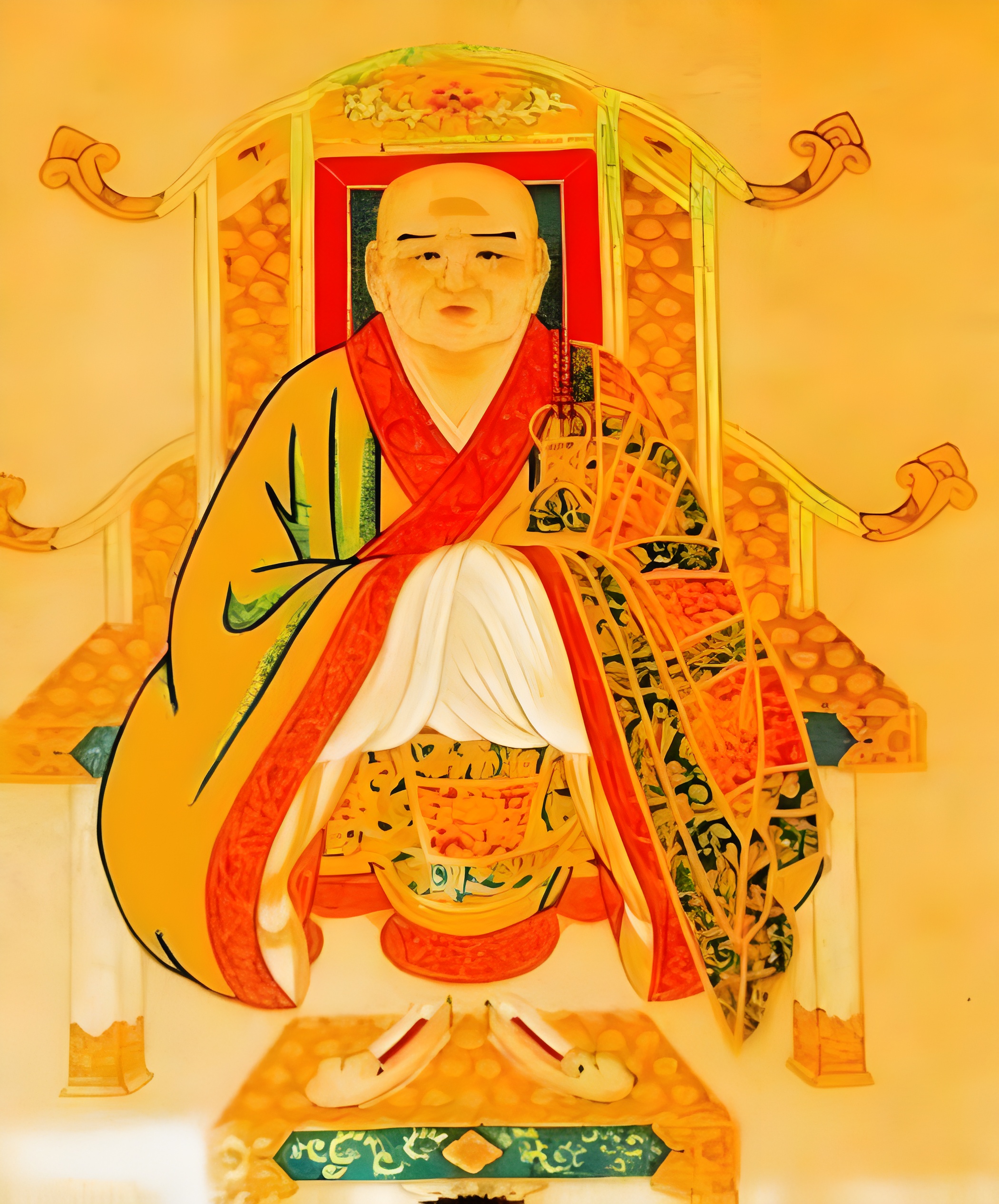
Master Tanluan, surname unknown, was from Yanmen. His home was near Mount Wutai, where spiritual traces and miracles were widely heard among the people. Before he had committed himself to study, he went there to seek them out. Seeing these sacred traces, his mind rejoiced, and he entered monastic life. He was well versed in both Buddhist and non-Buddhist texts, and especially profound in his study of the Four Treatises and Buddha-nature.
Master Daochuo
Lineage treatise: The Collection on Peace and Joy, upper and lower volumes.
Doctrinal classification: The Two Gates of the Sacred Path and the Pure Land Path.
Master Shandao
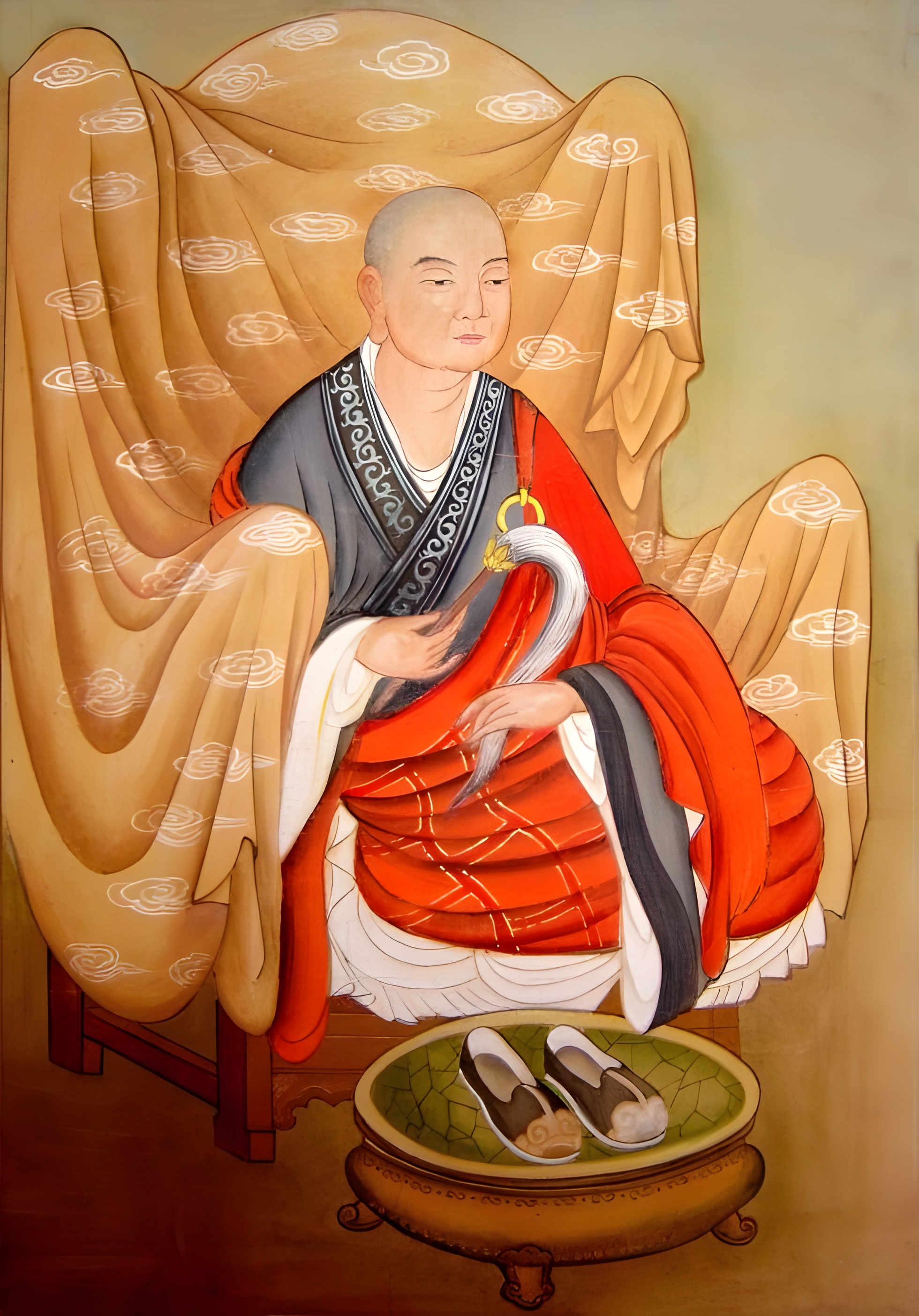
The eminent Tang monk Master Shandao (613-681) systematized the Pure Land teaching and is revered as the manifested body of Amitabha.
His extant writings are known as the Five Works in Nine Fascicles: Commentary in Four Fascicles on the Contemplation Sutra, Dharma Gate of Contemplation and Recitation, Hymns of Dharma Services, Hymns in Praise of Rebirth, and Hymns of Pratyutpanna. Among them, the Commentary in Four Fascicles is widely honored as the definitive commentary and regarded as an authoritative standard; Master Yinguang praised it as a guiding compass for Pure Land practitioners.